
News & Insights
How Insulating Glass Units Reduce Heat Transfer
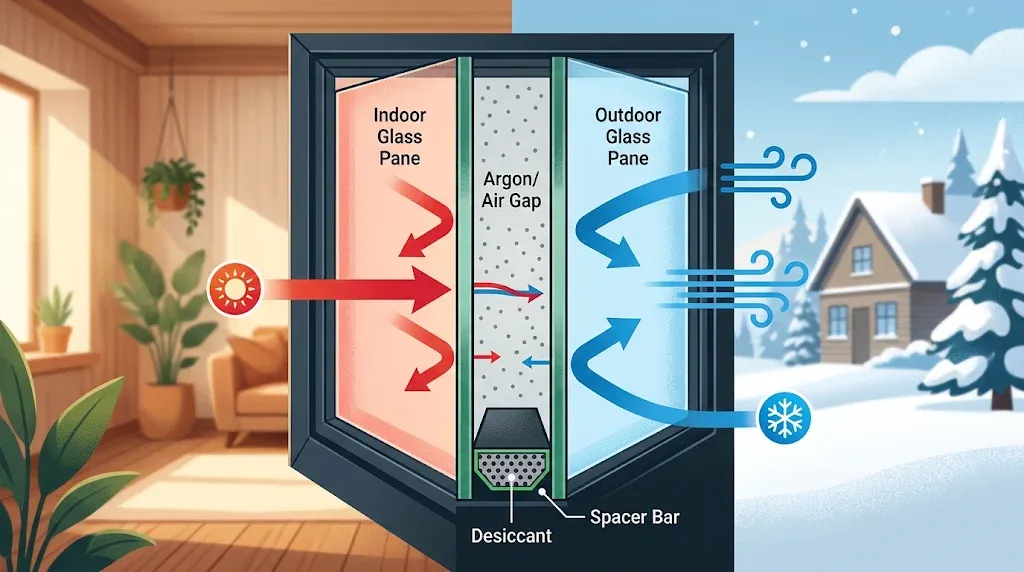
Energy efficiency is an increasingly important consideration in modern buildings. Windows and glass curtain walls provide natural light and architectural appeal, but they can also contribute to unwanted heat gain in summer and heat loss in winter.
Insulating Glass Units (IGUs) help address this challenge by combining multiple glass panes with a sealed insulating space between them. This structure reduces heat transfer and improves the thermal performance of building envelopes.
For commercial buildings, residential developments and large-scale architectural projects, IGUs are an important solution for balancing daylight, comfort and energy efficiency.
1. Multiple Glass Panes Create an Insulating Barrier
A typical double-glazed insulating glass unit consists of two glass panes separated by a spacer. The space between the panes is hermetically sealed and commonly filled with dry air or an insulating gas such as argon.
Unlike a single pane of glass, which provides a relatively direct path for heat transfer, an IGU introduces an additional insulating layer.
This structure helps reduce heat movement between indoor and outdoor environments, particularly by limiting conduction and convection within the sealed cavity.
Triple-glazed units use three glass panes and two insulating cavities to provide additional thermal resistance.
2. How the Sealed Air Space Reduces Heat Transfer
The cavity between glass panes is one of the most important components of an IGU.
Heat moves through three main mechanisms:
- Conduction: Heat travels through solid materials and gases.
- Convection: Heat moves through the circulation of air or gas.
- Radiation: Heat transfers through electromagnetic waves, including infrared radiation.
The sealed cavity reduces direct heat transfer and restricts air movement between the glass panes.
Argon gas is frequently used because its thermal conductivity is lower than that of ordinary air. The effectiveness of the cavity also depends on its width, gas concentration, edge construction and overall unit design.
3. Low-E Coatings Improve Thermal Performance
Low-E (low-emissivity) glass is an important option for improving insulating glass performance.
A Low-E coating is designed to reduce the amount of infrared heat transferred through the glass while maintaining useful visible light transmission.
Depending on the coating type and climate requirements, Low-E insulating glass can:
- Reduce unwanted solar heat gain.
- Help retain indoor heat during colder weather.
- Improve indoor temperature stability.
- Reduce heating and cooling demand.
Combining Low-E glass with an argon-filled cavity can provide better thermal performance than conventional clear double glazing.
4. Spacers and Sealing Are Essential
The spacer separates the glass panes and maintains the designed cavity width. Its material and construction influence heat transfer around the edges of the insulating glass unit.
High-performance IGUs may incorporate warm-edge spacers to reduce thermal bridging.
The sealing system is equally important. Proper edge sealing helps maintain the insulating gas concentration and prevents moisture from entering the cavity.
Poor sealing can lead to condensation between the panes, reduced insulation performance and premature product failure.
5. Understanding U-Factor and Solar Heat Gain Coefficient
When selecting insulating glass for an architectural project, two important performance indicators should be considered:
- U-Factor: Measures the rate of heat transfer through the glazing system. A lower U-factor indicates better thermal insulation.
- Solar Heat Gain Coefficient (SHGC): Measures how much solar radiation enters a building through the glazing. A lower SHGC means less solar heat gain.
These two indicators serve different purposes. In hot climates, reducing solar heat gain can help lower cooling demand, while a suitable U-factor improves insulation against temperature differences.
The optimal combination depends on building orientation, climate, façade design and energy-efficiency requirements.
6. Tianhou Glass: Insulating Glass Solutions for Modern Buildings
At Guangdong Tianhou Glass Engineering Co., Ltd., we provide architectural glass processing solutions for commercial buildings, residential developments and curtain wall engineering projects.
Based in Zhuhai, Guangdong, Tianhou Glass operates a manufacturing facility of approximately 20,000 square meters, serving construction and architectural glass requirements across South China.
Our glass product capabilities include:
- Double and triple insulating glass units.
- Low-E insulating glass.
- Tempered insulating glass.
- Laminated insulating glass.
- Customized architectural glazing solutions.
For projects involving large glass façades, energy-efficient windows or high-performance building envelopes, glass configuration should be selected according to the project’s technical specifications.
Tianhou Glass works with project requirements to consider glass thickness, cavity width, Low-E coating selection, gas filling and overall IGU construction.
Rather than applying the same configuration to every project, we focus on matching glass processing solutions to the actual application.
Conclusion
Insulating Glass Units reduce heat transfer through a combination of multiple glass panes, sealed insulating cavities, Low-E coatings, gas filling and effective edge sealing.
When these components are properly designed and manufactured, IGUs can improve building thermal performance, enhance indoor comfort and support energy-efficient architectural design.
For architects, developers and construction contractors, choosing the right insulating glass configuration is an important step toward building more comfortable and energy-conscious spaces.
Looking for insulating glass solutions for your next project? Contact Tianhou Glass for customized architectural glass processing and engineering support.