
News & Insights
The Growing Role of Glass in Net-Zero Building Design
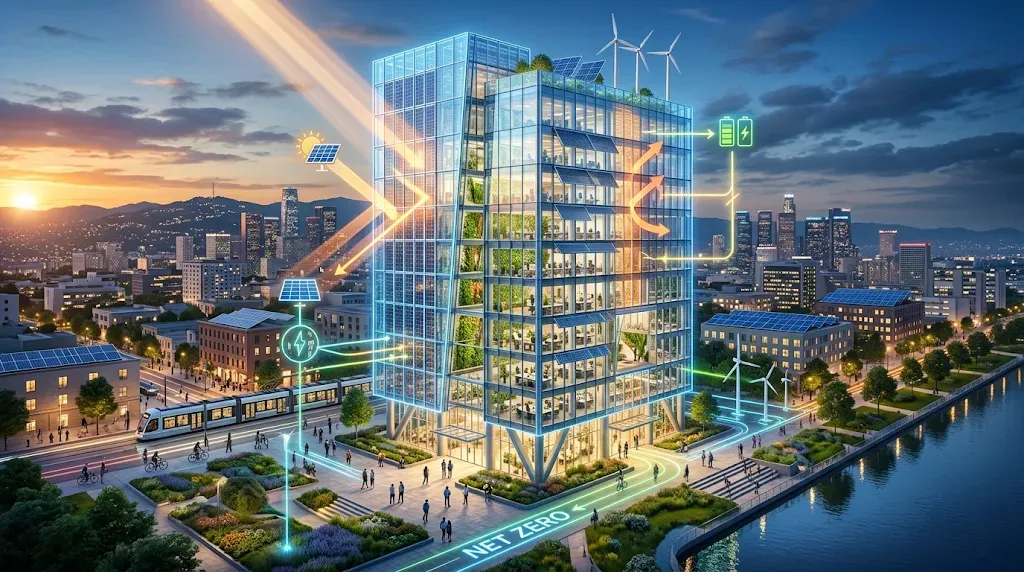
As the construction industry moves toward lower-carbon development, net-zero building design is becoming an important priority for architects, developers and building material suppliers. Glass plays an increasingly significant role in this transition because it influences natural daylight, solar heat gain, thermal insulation and overall building energy performance.
According to the United Nations Environment Programme and Global Alliance for Buildings and Construction, buildings and construction accounted for approximately 37% of global energy- and process-related CO₂ emissions in 2022. This highlights the importance of improving both building energy efficiency and the environmental performance of construction materials.
1. Why Glass Matters in Net-Zero Buildings
Glass is more than an architectural material used for windows and facades. Properly specified glazing can help reduce heating and cooling demand while providing natural daylight and outdoor views.
In net-zero building design, architects need to balance three important factors:
- Thermal performance: Reduce unwanted heat transfer between indoor and outdoor environments.
- Solar control: Manage solar heat gain while maintaining sufficient natural daylight.
- Daylighting: Reduce dependence on artificial lighting during daylight hours.
The right glazing system can contribute to all three objectives. However, performance depends on the complete window or facade assembly, including glass, frames, seals and shading systems.
2. Low-E Glass Improves Building Energy Efficiency
Low-emissivity (Low-E) glass is one of the most important glazing technologies for energy-efficient architecture.
Its microscopically thin coating helps control infrared radiation and reduce heat transfer through the glazing system.
Depending on the coating configuration, Low-E glass can:
- Reduce unwanted solar heat gain in cooling-dominated climates.
- Improve thermal insulation during colder seasons.
- Maintain useful levels of visible light transmission.
- Support more efficient heating and air-conditioning systems.
For buildings in warm regions, solar-control Low-E glass is particularly valuable because excessive solar radiation can increase indoor temperatures and cooling demand.
The selection should consider the Solar Heat Gain Coefficient (SHGC), visible light transmittance (VLT) and thermal transmittance (U-value), rather than relying on the Low-E label alone.
3. Insulated Glass Units Reduce Heat Transfer
Insulated Glass Units (IGUs) typically consist of two or more glass panes separated by a sealed air or gas-filled cavity.
This structure reduces heat transfer compared with single glazing and can improve indoor thermal comfort.
When combined with Low-E coatings, insulated glass units can provide further improvements in thermal performance.
For commercial buildings, office towers and large curtain wall projects, IGUs are an important solution for reducing unwanted heat exchange through the building envelope.
Proper spacer selection, edge sealing and installation quality are also essential to maintaining long-term performance.
4. Glass Selection Must Match the Local Climate
There is no single glass specification suitable for every net-zero building.
In hot and humid regions, such as southern China, controlling solar heat gain is often a major design consideration. High-performance Low-E glass and insulated glass units can help reduce cooling loads.
In colder climates, reducing heat loss becomes more important, making low-U-value glazing a priority.
Architects and engineers should consider:
- Building orientation and facade design.
- Local temperature and solar radiation.
- Window-to-wall ratio.
- U-value and SHGC requirements.
- Visible light transmission.
- External shading and ventilation strategies.
A properly designed glazing system should balance energy efficiency, daylight, visual comfort and architectural appearance.
5. Sustainable Glass Also Requires a Whole-Life Perspective
Net-zero building design is not only about reducing electricity consumption after construction. The carbon emissions associated with manufacturing, transporting, installing and replacing building materials also matter.
Glass manufacturers and construction companies therefore need to consider material efficiency, production waste, transportation and product durability.
Selecting appropriate glass specifications can help avoid unnecessary material consumption and replacement. At the same time, improving manufacturing processes and reducing waste are important steps toward lower-carbon construction.
A genuinely sustainable building should consider both operational carbon and embodied carbon throughout its life cycle.
6. How Tianhou Glass Supports Energy-Efficient Building Projects
Based in Zhuhai, Guangdong, Tianhou Glass (Guangdong Tianhou Glass Engineering Co., Ltd.) has been providing architectural and safety glass processing services since 2011.
With approximately 20,000 square meters of production facilities, Tianhou Glass supplies a range of products for modern architectural applications, including:
- Tempered Glass
- Laminated Glass
- Insulated Glass Units
- Low-E Glass
- Ultra-Clear Glass
- Decorative Architectural Glass
For example, when supporting a commercial curtain wall project in southern China, the glazing specification can be evaluated according to facade orientation, solar exposure and thermal performance requirements.
Tianhou Glass can provide Low-E glass and insulated glass processing solutions based on project drawings and technical specifications. This allows project teams to consider solar control, daylight transmission and thermal insulation when selecting their glazing systems.
The actual energy performance of a completed building will also depend on facade engineering, framing systems, installation quality, shading and HVAC design.
7. The Future of Glass in Net-Zero Architecture
As green building standards and low-carbon construction practices continue to develop, demand for high-performance architectural glass is expected to grow.
Low-E coatings, advanced insulated glazing and carefully designed curtain wall systems will remain important technologies for improving building energy performance.
For architects, developers and construction companies, choosing the right glass supplier is an important part of achieving these objectives.
With its architectural glass processing experience and product range, Tianhou Glass aims to support construction projects with practical glass solutions that meet their design, safety and performance requirements.
Tianhou Glass — Architectural & Safety Glass Solutions for a More Energy-Efficient Built Environment.