
News & Insights
Double Silver Low-E Glass: Benefits and Applications
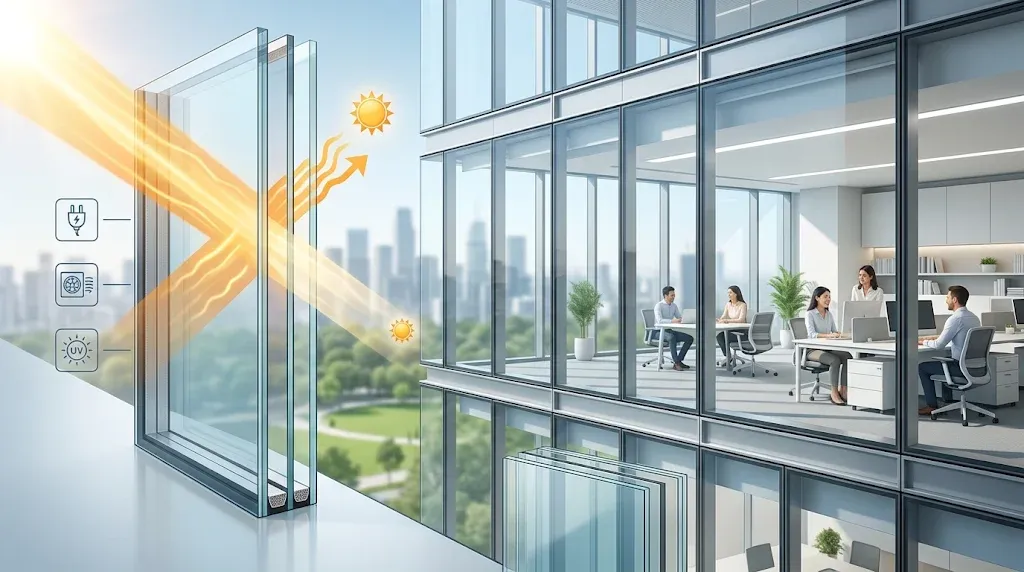
Double Silver Low-E Glass is an advanced energy-efficient glazing solution widely used in modern commercial buildings, high-rise curtain walls, office buildings, hotels, and residential developments. By using two silver-based functional coating layers, it provides an effective balance of solar heat control, natural daylight transmission, and thermal insulation.
For architectural projects in regions with hot summers and strong sunlight, double silver Low-E glass can help reduce cooling loads while maintaining comfortable indoor lighting conditions.
1. What Is Double Silver Low-E Glass?
Double Silver Low-E Glass is a type of coated glass featuring two functional silver (Ag) layers within a multi-layer coating system. These silver layers selectively reflect and transmit different wavelengths of solar radiation.
Visible light can pass through the glass, while a significant proportion of solar infrared radiation is reflected. This helps reduce unwanted solar heat entering a building.
Compared with single silver Low-E glass, double silver coatings generally offer better solar control while maintaining relatively high visible light transmission.
The coating is typically manufactured using magnetron sputtering technology under vacuum conditions. Multiple metallic and dielectric layers work together to achieve the required optical and thermal performance.
2. Key Benefits of Double Silver Low-E Glass
2.1 Excellent Solar Heat Control
One of the main advantages of double silver Low-E glass is its ability to reduce solar heat gain.
The Solar Heat Gain Coefficient (SHGC) measures how much solar heat enters a building through its glazing. A lower SHGC generally means better solar heat control.
Double silver Low-E glass can achieve relatively low SHGC values, making it suitable for buildings exposed to strong sunlight, particularly in tropical and subtropical climates.
2.2 High Natural Light Transmission
Despite its strong solar control performance, double silver Low-E glass can maintain good visible light transmission.
This allows commercial buildings to benefit from natural daylight while reducing excessive solar radiation.
For office buildings and shopping centers, this balance can improve indoor visual comfort and reduce the need for artificial lighting during daylight hours.
2.3 Improved Thermal Insulation
When incorporated into an insulating glass unit (IGU), double silver Low-E glass helps reduce heat transfer through the glazing system.
The Low-E coating reduces radiative heat transfer, while the sealed insulating cavity provides additional thermal resistance.
Argon gas can also be used in the cavity to improve the thermal performance of the insulating glass unit.
2.4 Energy Efficiency and Indoor Comfort
By controlling solar heat gain and reducing heat transfer, double silver Low-E glass can contribute to lower building energy consumption.
It is particularly useful for buildings with large glass façades, where glazing performance has a significant influence on indoor temperatures and HVAC requirements.
Actual energy savings depend on building orientation, climate, window-to-wall ratio, shading design, and the overall building envelope.
3. Main Applications of Double Silver Low-E Glass
3.1 Commercial Office Buildings
Large office buildings often use extensive glass façades to create modern architectural appearances. However, excessive solar heat can increase air-conditioning demand.
Double silver Low-E glass helps control solar radiation while maintaining natural daylight, making it a suitable choice for energy-efficient office buildings.
3.2 High-Rise Curtain Wall Systems
High-rise buildings require glazing solutions that balance aesthetics, structural requirements, and energy performance.
Double silver Low-E glass is widely used in curtain wall systems because it offers various coating colors, solar control levels, and light transmission options.
3.3 Hotels and Commercial Complexes
Hotels, shopping malls, and mixed-use developments often feature large glass areas. Double silver Low-E insulating glass can help improve indoor thermal comfort while maintaining attractive exterior appearances.
3.4 Residential Buildings
In premium residential developments, double silver Low-E glass can be used for large windows, balconies, and floor-to-ceiling glazing. It helps reduce unwanted solar heat while allowing residents to enjoy natural daylight and outdoor views.
4. Double Silver Low-E Glass vs. Single Silver Low-E Glass
The main difference is the number of functional silver layers and their impact on solar performance.
| Performance | Single Silver Low-E | Double Silver Low-E |
|---|---|---|
| Silver layers | One | Two |
| Solar control | Good | Generally better |
| Visible light transmission | Varies by coating | Can maintain high transmission |
| Solar selectivity | Moderate to high | Generally higher |
| Typical applications | Residential and commercial | High-performance façades and commercial buildings |
Actual performance depends on the coating design, glass substrate, and insulating glass configuration. Double silver does not automatically mean better performance in every application. The complete glazing specification should be evaluated against project requirements.
5. How to Choose the Right Double Silver Low-E Glass
Selecting the correct product requires more than simply choosing a double silver coating.
Architects, contractors, and glass purchasers should consider the following factors:
- Visible Light Transmittance (VLT): Determines how much natural daylight enters the building.
- Solar Heat Gain Coefficient (SHGC): Indicates how much solar heat passes through the glazing system.
- U-Value: Measures the rate of heat transfer through the glazing. Lower values indicate better thermal insulation.
- Glass Configuration: Consider single glazing, double glazing, laminated insulating glass, or other combinations.
- Safety Requirements: Tempered or laminated glass may be necessary depending on building location and applicable safety standards.
- Climate Conditions: Hot climates generally require stronger solar control, while colder climates may require a different balance between solar gain and insulation.
For reference, one commercial double silver product, Guardian SunGuard SNR 43, achieves 43% visible light transmission and an SHGC of 0.22 in a specified 6-12.7-6 mm insulating glass configuration with argon gas. This illustrates how double silver coatings can balance daylight and solar control. Actual values vary between products and configurations.
6. Tianhou Glass: Architectural Glass Solutions for Modern Buildings
Guangdong Tianhou Glass Engineering Co., Ltd. is a professional architectural glass processing manufacturer based in Zhuhai, Guangdong, China.
With approximately 20,000 m² of production facilities and more than 15 years of industry experience, Tianhou Glass provides architectural glass processing solutions for commercial buildings, residential developments, public facilities, and curtain wall projects.
Our glass processing capabilities include:
- Tempered glass processing
- Laminated safety glass
- Insulated glass units (IGU)
- Low-E glass processing
- Curtain wall glass solutions
- Custom-sized architectural glass
Tianhou Glass has participated in various architectural and public infrastructure projects, including Zhuhai Station, Zhongshan North Station, Zhuhai No. 26 Primary School, and other commercial and educational developments.
For projects involving double silver Low-E glass, our team can help evaluate glass specifications, processing requirements, and suitable glazing configurations according to project drawings and performance targets.
Whether you are developing a commercial curtain wall, a high-rise office building, or a modern residential project, selecting the right glass manufacturer is essential to achieving consistent product quality and reliable project delivery.
Contact Tianhou Glass for customized architectural glass solutions and project quotations.
7. Frequently Asked Questions
Q1: Is double silver Low-E glass better than single silver Low-E glass?
Generally, double silver Low-E glass provides better solar selectivity and solar heat control. However, the best option depends on the project’s daylighting, thermal, and budget requirements.
Q2: Can double silver Low-E glass be tempered?
Yes. Heat-treatable double silver Low-E products can be tempered, provided the coating is specifically designed and approved for heat treatment. Processing requirements should be confirmed with the coating manufacturer.
Q3: Can double silver Low-E glass be used in insulating glass units?
Yes. It is commonly incorporated into double-glazed or triple-glazed insulating glass units to improve solar control and thermal performance.
Q4: Is double silver Low-E glass suitable for tropical climates?
Yes. Its solar control characteristics make it a suitable option for many tropical and subtropical buildings, particularly those with large glass façades.
Q5: Does double silver Low-E glass reduce electricity consumption?
It can help reduce cooling and lighting energy demand, but actual savings depend on the building design, local climate, HVAC systems, glazing area, and installation quality.