
News & Insights
Double vs. Triple Glazing: Key Differences, Benefits and Applications
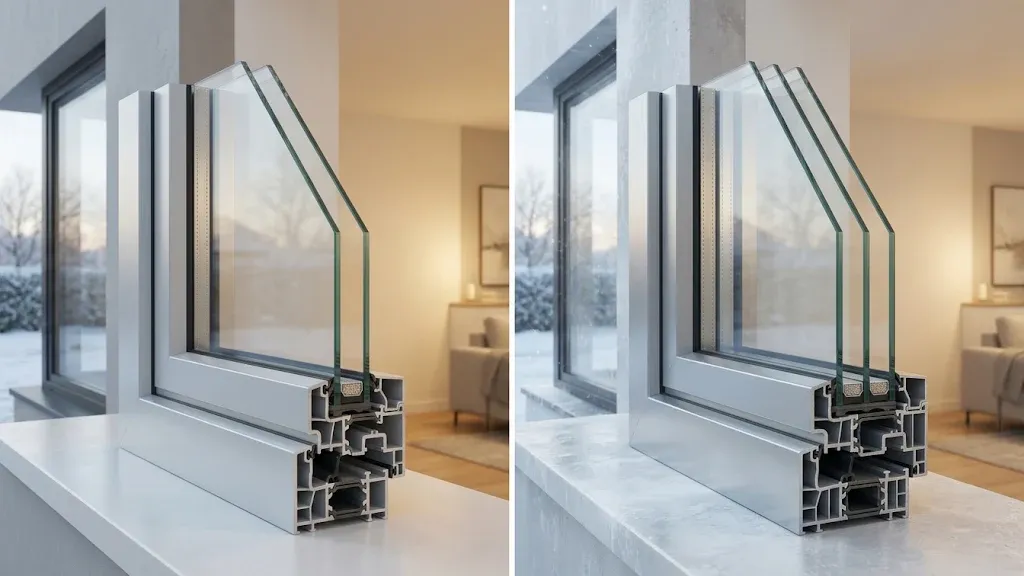
Choosing the right glass configuration is essential for improving building energy efficiency, indoor comfort, and acoustic performance. Double glazing and triple glazing are two widely used insulated glass solutions in modern residential, commercial, and architectural projects.
Although both are designed to reduce heat transfer, they differ in glass layers, insulation performance, weight, cost, and application requirements.
1. What Is Double Glazing?
Double glazing, also known as double-pane insulated glass, consists of two glass panes separated by a sealed cavity. This cavity is typically filled with dry air or an inert gas such as argon.
A typical double-glazed unit includes:
- Two glass panes
- One sealed insulating cavity
- A spacer bar with desiccant
- Primary and secondary edge seals
The insulating cavity reduces heat transfer between indoor and outdoor environments. When combined with Low-E glass and argon gas, double glazing can provide significantly improved thermal performance.
Common applications:
- Residential windows and doors
- Commercial building facades
- Office buildings
- Hotels and apartments
- Curtain wall systems
Double glazing offers a practical balance between thermal insulation, natural daylight, structural weight, and overall project cost.
2. What Is Triple Glazing?
Triple glazing consists of three glass panes separated by two sealed insulating cavities.
Each cavity can contain dry air or argon gas, while Low-E coatings can be applied to selected glass surfaces to further reduce heat transfer.
A typical triple-glazed unit includes:
- Three glass panes
- Two sealed insulating cavities
- Spacer bars with desiccant
- Multiple edge-sealing systems
The additional glass pane and insulating cavity help reduce heat transfer, making triple glazing particularly suitable for buildings with demanding thermal insulation requirements.
Common applications:
- Buildings in cold climates
- Passive house projects
- High-performance residential buildings
- Energy-efficient commercial developments
- Projects requiring enhanced indoor thermal comfort
However, triple glazing is generally heavier and more expensive than comparable double glazing. Its suitability should therefore be evaluated alongside the structural capacity of the window or facade system.
3. Double Glazing vs. Triple Glazing: Key Differences
| Comparison | Double Glazing | Triple Glazing |
|---|---|---|
| Glass panes | 2 | 3 |
| Insulating cavities | 1 | 2 |
| Thermal insulation | Good | Generally better |
| Sound insulation | Good, configuration dependent | Potentially better, configuration dependent |
| Weight | Lower | Higher |
| Material cost | Generally lower | Generally higher |
| Visible light transmission | Often higher | May be lower |
| Installation requirements | Relatively simpler | Requires consideration of additional weight and thickness |
The actual performance depends on glass thickness, cavity width, gas filling, Low-E coating, spacer design, and frame construction.
4. Which Provides Better Thermal Insulation?
Thermal insulation is one of the most important differences between double and triple glazing.
The additional glass pane and second insulating cavity in triple glazing can reduce heat transfer through the glazing unit. This helps maintain more stable indoor temperatures and can reduce heating and cooling demand.
However, the number of glass panes alone does not determine energy efficiency.
Several factors should be considered:
Low-E Coatings
Low-E glass uses a low-emissivity coating to reduce radiant heat transfer. It can improve the thermal performance of both double and triple glazing.
Gas Filling
Argon gas has lower thermal conductivity than ordinary air and can improve the insulation performance of sealed glass units.
Spacer Systems
Warm-edge spacers help reduce heat transfer around the edges of insulated glass units and can improve condensation resistance.
U-Value
U-value measures the rate of heat transfer through a glazing product. A lower U-value generally indicates better thermal insulation.
For accurate comparisons, project specifications should use comparable test conditions and distinguish between center-of-glass U-values and whole-window U-values.
5. Which Is Better for Sound Insulation?
Both double and triple glazing can reduce outside noise, but adding another glass pane does not automatically guarantee better acoustic performance.
Sound insulation depends on several factors:
- Glass thickness and mass
- Differences in glass pane thickness
- Cavity width
- Laminated acoustic glass
- Frame construction and airtightness
For buildings near highways, airports, railway stations, or busy urban areas, an asymmetrical insulated glass configuration or laminated acoustic glass may provide better results than simply adding another pane.
The appropriate solution should be selected according to the required acoustic performance and tested sound insulation rating.
6. Which Should You Choose for Your Building Project?
There is no universal answer. The right choice depends on the building location, climate, energy targets, facade design, and project budget.
Choose double glazing when:
- The project requires a cost-effective insulation solution.
- The building is located in a moderate climate.
- Standard residential or commercial glazing performance is sufficient.
- Weight and installation costs are important considerations.
Choose triple glazing when:
- The building is located in a region with very cold winters.
- Higher thermal insulation performance is required.
- The project targets demanding energy-efficiency standards.
- The facade and supporting structures can accommodate heavier glass units.
For buildings in warmer climates, solar heat gain control may be just as important as thermal insulation. A properly specified Low-E double-glazed unit may offer a better overall balance than a basic triple-glazed configuration.
7. Tianhou Glass: Customized Insulated Glass Solutions
At Guangdong Tianhou Glass Engineering Co., Ltd., we understand that different architectural projects require different glazing configurations.
With more than 15 years of experience in glass processing and architectural glass solutions, Tianhou Glass provides customized insulated glass products for residential, commercial, and large-scale construction projects.
Our insulated glass solutions can incorporate:
- Double and triple glazing configurations
- Single silver and double silver Low-E glass
- Clear and ultra-clear glass
- Argon gas-filled cavities
- Tempered and laminated glass combinations
- Customized glass thicknesses and dimensions
For example, consider a commercial building project in a region with demanding thermal insulation requirements. Tianhou Glass can evaluate a triple-glazed Low-E configuration to help meet the project’s thermal performance targets. For a project in a warmer climate, a solar-control Low-E double-glazed unit may provide a more practical solution.
The final specification should be determined by project-specific thermal calculations, structural requirements, acoustic targets, and applicable building standards.
Conclusion: Double or Triple Glazing?
Double glazing is a reliable and cost-effective solution for many modern buildings, while triple glazing offers additional thermal insulation for projects with more demanding energy-efficiency requirements.
The best choice is not necessarily the one with more glass layers. It is the glazing configuration that delivers the right balance of thermal performance, solar control, acoustic insulation, safety, weight, and cost.
Looking for a reliable insulated glass manufacturer for your next architectural project?
Contact Tianhou Glass for customized double-glazed, triple-glazed, and Low-E insulated glass solutions tailored to your project requirements.