
News & Insights
High-Performance Glazing for a Luxury Hotel Facade
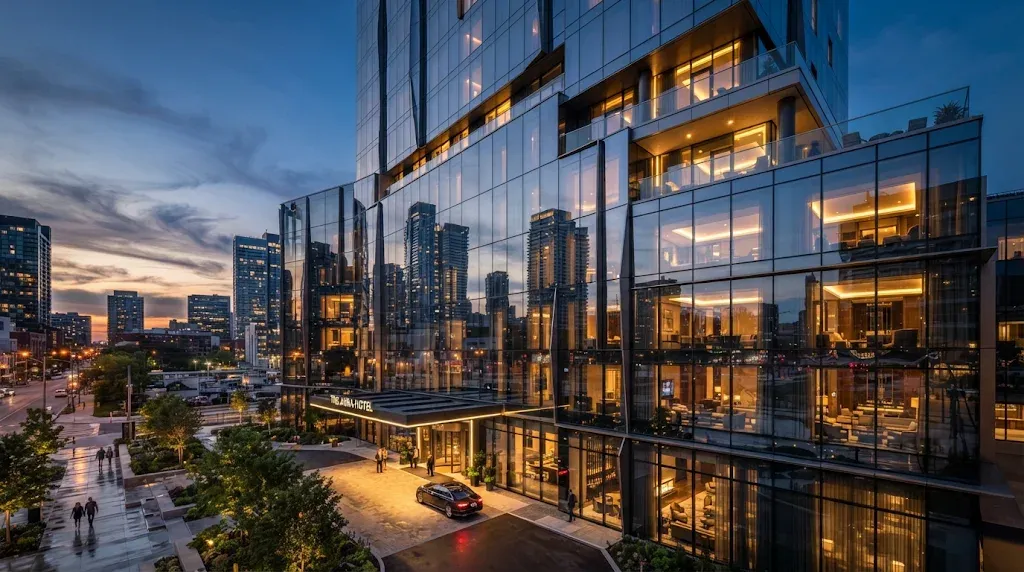
A luxury hotel facade is more than an architectural statement. It plays an essential role in guest comfort, energy efficiency, acoustic performance, safety, and the overall identity of the property.
Large glass facades are widely used in luxury hotels because they create open views, introduce natural daylight, and connect interior spaces with the surrounding environment. However, selecting the right glazing system requires balancing architectural appearance with demanding building performance requirements.
For hotel developers, architects, and facade contractors, high-performance glazing is an important investment in both building quality and long-term operational efficiency.
1. Thermal Performance and Energy Efficiency
Hotels operate throughout the day and night, often requiring continuous heating, cooling, and ventilation. Poorly selected facade glass can increase unwanted solar heat gain and heat transfer, placing additional demands on HVAC systems.
Low-E insulated glass units (IGUs) are an effective solution for improving thermal performance.
A typical high-performance configuration may include:
- Double or triple glazing, depending on project requirements.
- Low-E coatings to reduce radiant heat transfer.
- Argon gas-filled cavities to improve insulation.
- Solar-control coatings to manage unwanted solar heat gain.
Two important performance indicators are the U-value and Solar Heat Gain Coefficient (SHGC). A lower U-value generally indicates better thermal insulation, while a lower SHGC means less solar heat enters the building.
The ideal combination depends on the hotel’s climate, orientation, facade design, and energy strategy.
2. Acoustic Insulation for Guest Comfort
Noise control is particularly important for luxury hotels located in city centers, commercial districts, and busy transportation areas.
External noise from traffic, construction, and urban activities can affect the guest experience.
Laminated glass and appropriately designed insulating glass units can help reduce sound transmission.
Acoustic performance depends on several factors, including:
- Glass thickness and combination.
- Interlayer material and thickness.
- Air cavity width.
- Glass asymmetry.
- Frame and facade sealing performance.
For hotels near airports, highways, or entertainment districts, acoustic glazing should be considered during the early facade design stage.
3. Safety and Structural Reliability
Hotel facades must meet strict structural and safety requirements, particularly in high-rise buildings and areas exposed to strong winds.
Common glass solutions include:
Tempered Glass: Offers increased mechanical strength compared with ordinary annealed glass and breaks into smaller fragments when fractured.
Heat-Strengthened Glass: Provides improved resistance to thermal stress and mechanical loading.
Laminated Glass: Uses an interlayer to help retain glass fragments after breakage, providing additional post-breakage protection.
Insulated Laminated Glass: Combines thermal insulation with enhanced safety performance for demanding facade applications.
Glass thickness and configuration should be determined through structural calculations, considering wind loads, panel dimensions, support conditions, building height, and applicable local standards. ASTM E1300 is one recognized reference for evaluating the load resistance of glass in buildings.
4. Architectural Appearance and Natural Daylight
The visual quality of a luxury hotel is strongly influenced by its facade.
Architects often prefer large glass panels, neutral reflections, high transparency, and consistent exterior colors to create an elegant and modern appearance.
Ultra-clear glass can improve visible light transmission and reduce the greenish appearance associated with conventional clear glass.
Depending on the architectural concept, designers may also consider:
- Double silver Low-E glass for solar and thermal control.
- Reflective glass for distinctive exterior appearances.
- Ultra-clear laminated glass for transparent architectural elements.
- Decorative glass for entrance areas and interior public spaces.
The selection should consider visible light transmittance, exterior reflectance, color consistency, and the overall facade design.
5. Tianhou Glass: Architectural Glass Solutions for Hotel Projects
Guangdong Tianhou Glass Engineering Co., Ltd. is a glass processing manufacturer established in 2011, based in Zhuhai, Guangdong, China.
With a production facility of approximately 20,000 square meters, Tianhou Glass provides architectural and safety glass processing solutions for commercial buildings, hotels, educational facilities, and other construction projects.
Its product capabilities include:
- Tempered and heat-strengthened glass.
- Laminated safety glass.
- Double and triple insulated glass units.
- Double silver Low-E glass.
- Ultra-clear glass.
- Customized architectural glass processing.
Tianhou Glass has also participated in hotel-related projects in Macau, including Treasure Island and Imperial Court. These projects form part of its experience in supplying architectural glass for commercial and hospitality environments.
For luxury hotel facade projects, Tianhou Glass can work with project owners, architects, facade contractors, and glass distributors to develop suitable glass configurations based on drawings, technical specifications, and project requirements.
6. How to Choose the Right Glazing for a Luxury Hotel
Before confirming a glazing specification, project teams should evaluate several key factors:
| Selection Factor | Key Considerations |
|---|---|
| Thermal performance | U-value, SHGC and Low-E coating |
| Acoustic performance | Laminated structure and IGU configuration |
| Structural safety | Wind load, glass thickness and support |
| Visual appearance | Transparency, reflection and color |
| Durability | Edge sealing, coating protection and installation |
| Compliance | Local building codes and safety standards |
There is no single glass configuration suitable for every luxury hotel. The best solution is one that balances energy performance, guest comfort, safety, architectural design, and project budget.
Conclusion
High-performance glazing is a fundamental component of modern luxury hotel architecture. From Low-E insulated glass to laminated safety glass, the right combination can improve indoor comfort, reduce unwanted heat gain, enhance acoustic performance, and create an impressive exterior appearance.
For hotel developers and facade contractors looking for a reliable architectural glass processing partner, Tianhou Glass offers customized glass solutions backed by manufacturing experience and project capabilities.
Planning a luxury hotel facade project? Contact Tianhou Glass to discuss your drawings, glass specifications, and customized architectural glazing requirements.