
News & Insights
Solar Control Glass: When Should You Use It?
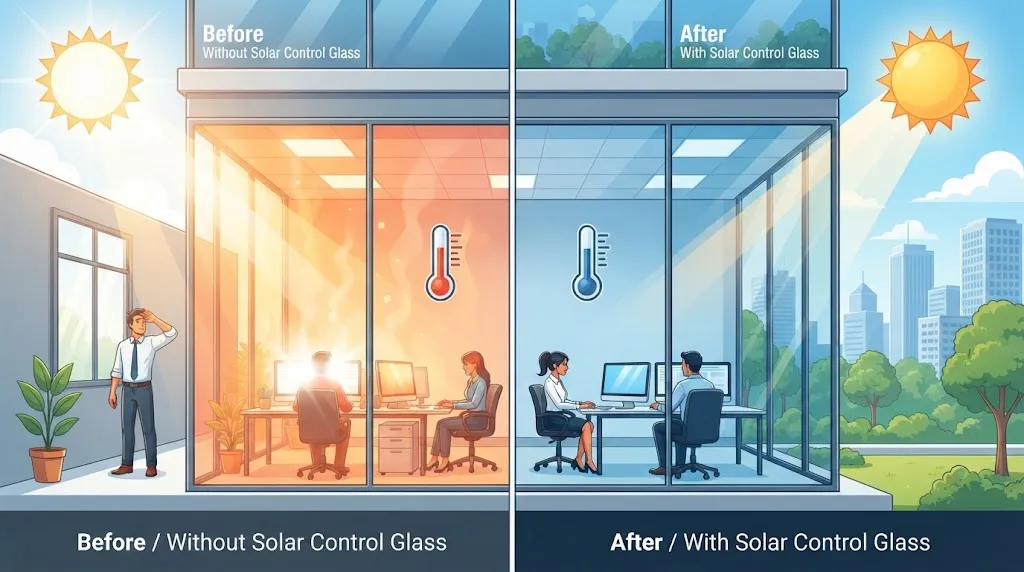
Modern buildings need glass that does more than provide natural light and attractive views. In warm climates, direct sunlight can increase indoor temperatures, create glare, and raise air-conditioning demand. Solar control glass helps manage unwanted solar heat while maintaining a suitable level of natural daylight.
For commercial buildings, residential developments, and glass curtain walls, choosing the right glazing specification can improve indoor comfort and support energy-efficient building design.
1. What Is Solar Control Glass?
Solar control glass is designed to reduce unwanted solar heat entering a building while controlling the amount of visible light transmitted through the glazing. Depending on the product, this performance can be achieved through specialized coatings, tinted glass, or combinations of glazing technologies.
Solar control Low-E glass can provide both solar heat management and improved thermal performance when incorporated into a suitable glazing system.
Two key performance indicators help architects and buyers compare products:
- Solar Heat Gain Coefficient (SHGC): Measures how much solar heat enters through a window or glazing system. A lower value generally means less solar heat gain.
- Visible Light Transmittance (VLT): Measures how much visible daylight passes through the glass. A higher value generally means a brighter interior.
The goal is to balance these two properties rather than simply choosing the darkest glass. The appropriate specification depends on climate, building orientation, shading, and energy performance requirements.
2. When Should You Use Solar Control Glass?
Hot Climates and Buildings with High Cooling Demand
Solar control glass is particularly useful in hot and sunny regions where buildings rely heavily on air conditioning. Reducing unwanted solar heat gain can help manage cooling loads and improve indoor comfort.
For projects in southern China, Southeast Asia, the Middle East, and other sun-exposed markets, solar control glazing deserves particular consideration.
Glass Curtain Walls on Commercial Buildings
Office towers, shopping centers, hotels, and other commercial buildings often have large glazed façades. Without suitable solar control, direct sunlight can contribute to overheating and uncomfortable working conditions.
Solar control glass can help balance the façade’s appearance, daylight access, and thermal performance. The final specification should account for the entire curtain wall system, not just the glass itself.
East- and West-Facing Windows
East-facing windows receive strong morning sunlight, while west-facing windows can experience intense afternoon solar exposure. These façades can be particularly challenging to shade effectively.
Solar control glass can reduce unwanted heat gain and glare, especially when combined with external shading devices and appropriate façade design.
Buildings That Need Daylight Without Excessive Heat
Schools, hotels, offices, and residential buildings benefit from natural daylight, but excessive solar gain can undermine indoor comfort.
Spectrally selective solar control coatings can help maintain useful daylight while limiting some unwanted solar radiation. The required balance depends on the project’s daylighting objectives and glass performance data.
3. Solar Control Glass vs. Standard Glass
| Feature | Standard Clear Glass | Solar Control Glass |
|---|---|---|
| Solar heat control | Generally limited | Designed to reduce unwanted solar heat gain |
| Natural daylight | Often high | Depends on the coating and specification |
| Glare management | Limited | Can help reduce glare |
| Energy performance | Depends on the glazing system | Can help reduce cooling demand in suitable climates |
| Typical applications | General windows and glazing | Curtain walls, commercial façades, sun-exposed windows |
Solar control glass is not automatically the best choice for every building. In cold climates, some solar heat gain can be beneficial during winter. Designers should therefore consider seasonal conditions alongside heating and cooling requirements.
4. How to Choose the Right Solar Control Glass
Before placing an order, architects, contractors, and glass buyers should evaluate the following factors:
- Climate and building orientation: Identify which façades receive the strongest solar exposure and whether heating or cooling dominates energy demand.
- SHGC and visible light transmittance: Set target values based on the project’s energy model, daylight requirements, and local building codes.
- Insulating glass configuration: Consider double or triple glazing and appropriate Low-E coatings when both solar control and thermal insulation are required.
- Safety and structural requirements: Specify tempered or laminated glass where required by the façade design, wind loads, impact risks, and applicable standards.
- Appearance and consistency: Confirm glass color, external reflectance, transparency, and visual consistency across the façade.
Performance figures should be assessed for the complete glazing or window system wherever possible. Solar control alone does not guarantee excellent thermal insulation, acoustic performance, or safety.
5. Tianhou Glass: Solar Control Solutions for Architectural Projects
Tianhou Glass is a glass manufacturer based in Zhuhai, Guangdong, China, providing architectural glass processing and project-oriented glazing solutions.
Our project experience includes the Zhuhai Railway Station Curtain Wall and Skylight Project, the Zhongshan North Railway Station Glass Project, and the Treasure Island Hotel Macau Glass Project. These projects demonstrate experience supplying architectural glazing for transportation, hospitality, and other demanding building environments.
For projects requiring solar control, Tianhou Glass can help buyers evaluate suitable Low-E glass, insulating glass, tempered glass, and laminated glass configurations according to project drawings and performance requirements.
The appropriate combination depends on the building’s location, façade orientation, design objectives, and required technical specifications. Actual project performance should be confirmed using the selected glass configuration’s documented test data.
Conclusion
Solar control glass is a strong option for buildings exposed to intense sunlight, large glazed façades, and projects with significant cooling demands. The best solution balances solar heat gain, natural daylight, thermal insulation, safety, and architectural appearance.
For architects, contractors, and international glass buyers, selecting the right specification early in the design process can help avoid costly changes later. Tianhou Glass supports project-based glass selection and processing to meet the needs of modern architectural applications.