
News & Insights
Low-E Insulated Glass for a Large Commercial Building in Zhuhai
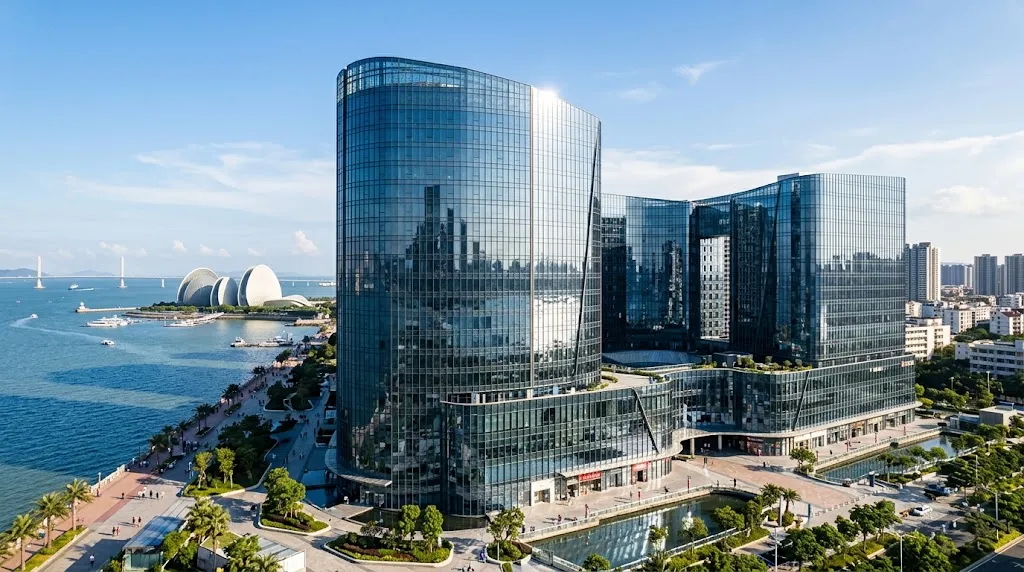
Project Overview
Large commercial buildings in Zhuhai need glazing systems that balance natural daylight, thermal comfort, energy efficiency, and architectural appearance. With a warm, humid, subtropical climate and substantial cooling demand during hot weather, selecting the right glass for a commercial façade is an important part of building design.
Tianhou Glass provides architectural glass processing solutions for commercial buildings, including Low-E insulated glass designed to help manage solar heat gain and reduce heat transfer through glazed façades.
Why Choose Low-E Insulated Glass?
Low-E insulated glass combines a low-emissivity coating with a sealed insulating glass unit (IGU). The coating helps control heat transfer by reducing the amount of infrared energy exchanged through the glazing, while the sealed cavity between glass panes improves thermal insulation.
For a large commercial building, this combination offers several advantages:
- Improved thermal performance: Low-E coatings and insulating cavities help reduce heat transfer through the glass, supporting a more stable indoor temperature.
- Reduced solar heat gain: The appropriate Low-E specification can limit unwanted solar heat entering the building, helping reduce cooling demand.
- Natural daylight: Glass coatings can be selected to balance visible light transmission with solar control, supporting bright and comfortable interior spaces.
- Better indoor comfort: Properly specified insulated glass can help reduce temperature differences near windows and improve the overall indoor environment.
- Architectural flexibility: Different glass thicknesses, coating types, cavity widths, and configurations can be considered to meet façade design requirements.
Actual performance depends on the complete glazing specification, frame system, building orientation, shading design, and local climate conditions.
Tianhou Glass Project Case: Commercial Building in Zhuhai
For a large commercial building in Zhuhai, Tianhou Glass focuses on the practical requirements of architectural glazing: thermal performance, façade appearance, product consistency, and suitability for project installation.
Low-E insulated glass is a suitable solution to evaluate for this type of project because it combines solar-control capabilities with the insulating benefits of double glazing. The final configuration should be determined according to the building’s façade design, energy-efficiency targets, safety requirements, and installation conditions.
Key considerations include:
- Low-E coating selection: Choose a coating that balances solar heat gain control and daylight requirements.
- Insulating glass configuration: Determine the glass thickness, cavity width, and air or gas filling based on project specifications.
- Safety and structural requirements: Assess wind loads, glass dimensions, support conditions, and whether heat-treated or laminated glass is required.
- Fabrication quality: Check edge processing, sealing, dimensional accuracy, and compatibility with the façade system.
- Installation coordination: Confirm glazing dimensions, tolerances, and interface requirements with the façade contractor before production.
As an architectural glass processor based in Zhuhai, Tianhou Glass supports project-specific glass processing and glazing configurations for commercial and architectural applications. Final product selection and performance claims should be verified against the approved specifications and test documentation for the actual project.
How to Evaluate Low-E Insulated Glass Performance
When comparing products for a commercial building, buyers should review more than the glass appearance or the Low-E coating description.
Three important performance indicators are:
U-value: Measures heat transfer through the glazing. A lower U-value generally indicates better thermal insulation.
Solar Heat Gain Coefficient (SHGC): Measures the fraction of incident solar energy that enters through the glazing as heat. A lower SHGC generally means less solar heat gain, which can be beneficial in cooling-dominated conditions.
Visible Light Transmittance (VLT): Indicates how much visible light passes through the glazing. A higher value allows more daylight, but must be balanced against glare, solar gain, and façade design requirements.
For a Zhuhai commercial project, these indicators should be evaluated together rather than independently. The most suitable glass is the one that meets the building’s overall energy, daylight, comfort, safety, and architectural objectives.
Conclusion
Low-E insulated glass can be an effective choice for large commercial buildings in Zhuhai, particularly where solar control, indoor comfort, and façade performance are key priorities. Successful results depend on selecting the right coating and insulating glass configuration and coordinating the glass specification with the complete building envelope.
Tianhou Glass works with project teams to evaluate architectural glass processing solutions for commercial buildings, curtain walls, and other demanding applications. For project-specific recommendations, provide the façade drawings, glass dimensions, performance targets, and applicable safety requirements.
Looking for Low-E insulated glass for a commercial building in Zhuhai? Contact Tianhou Glass to discuss your project requirements.