
News & Insights
How High-Performance Glass Was Used in a Macau Luxury Hotel
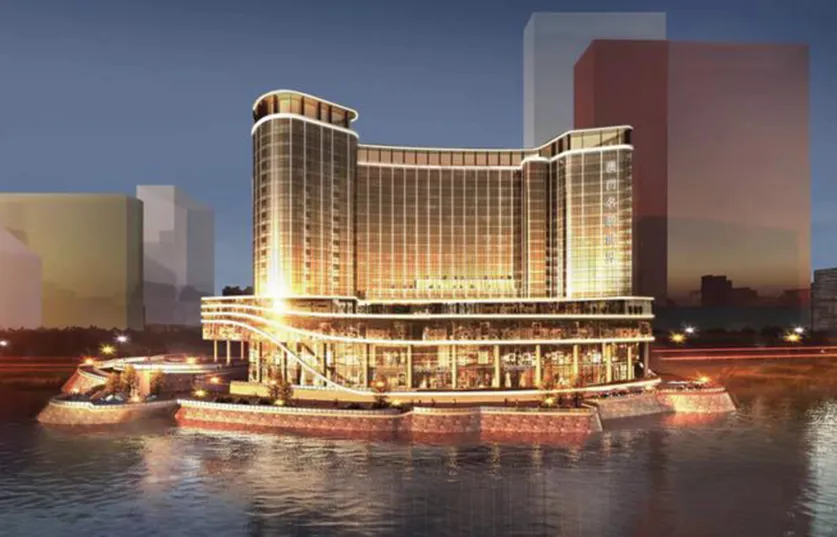
Luxury hotels require more than impressive architecture. Their glass systems must balance visual clarity, thermal performance, safety, privacy, acoustic comfort, and interior design. In Macau, where buildings experience a humid subtropical climate and hotels operate in a busy urban environment, selecting the right glass configuration is an important part of project planning.
Tianhou Glass has supplied architectural and decorative glass solutions for hospitality projects in Macau, demonstrating how different glass products can meet the functional and aesthetic requirements of premium hotel spaces.
Project Case Study: Imperial Court Hotel, Macau
The Imperial Court Hotel, Macau, is one example of Tianhou Glass’s hotel and hospitality project experience. The project incorporated multiple glass solutions for different architectural applications, including façade glazing, guest rooms, lobby spaces, bathrooms, and interior partitions.
Rather than relying on a single glass type throughout the building, the project used different configurations to address specific performance requirements.
1. Low-E Insulating Glass for Thermal Performance
The project used ultra-clear, double-silver Low-E insulating glass incorporating tempered and laminated glass.
Low-emissivity (Low-E) coatings help control heat transfer and solar energy transmission. When incorporated into a properly designed insulating glass unit, they can improve the thermal performance of the building envelope and help reduce cooling demand.
For hotels in warm, humid climates, appropriate glazing selection can contribute to indoor comfort while preserving natural daylight and exterior views. Actual energy performance depends on the complete glazing specification, window-to-wall ratio, orientation, shading, and building systems.
2. Laminated and Tempered Glass for Safety
Tempered glass is heat-treated to provide greater mechanical strength and thermal-shock resistance than comparable annealed glass. When it breaks, it generally fragments into smaller pieces.
Laminated glass consists of two or more glass layers bonded by an interlayer. If the glass breaks, the interlayer helps retain fragments and maintain a barrier, depending on the system design and damage conditions.
Combining these technologies allows project teams to address safety requirements in selected façade and interior applications. The final configuration must be determined according to panel dimensions, wind loads, support conditions, applicable building codes, and the intended use of each area.
3. Decorative Glass for Premium Interiors
Luxury hospitality design also depends on details that shape the guest experience.
At the Imperial Court Hotel, Tianhou Glass supplied art-wire laminated glass, nano easy-clean shower glass, and smart dimming glass partitions for different interior applications.
These products serve distinct purposes. Decorative wire glass adds texture and visual character; easy-clean treatments can help reduce the adhesion of water stains and simplify maintenance; and switchable glass partitions can provide on-demand visual privacy when compatible with the specified system.
Together, these solutions support a balance between contemporary design, practical maintenance, and flexible interior spaces.
A Second Macau Reference: Treasure Island Hotel
Tianhou Glass also lists the Treasure Island Hotel Macau glass project in its hospitality portfolio. The project features triple-silver Low-E ultra-clear insulating laminated glass, heat-bent ultra-clear tempered glass, gradient art-wire glass, and frameless partitions.
This combination illustrates an important principle in hotel glazing: different areas may require different solutions. Energy-efficient façade glazing, curved architectural elements, decorative features, and interior partitions should be selected according to their individual design and performance objectives.
What Can Hotel Developers Learn from These Projects?
For developers, architects, façade contractors, and procurement teams, several considerations are essential when specifying glass for a luxury hotel:
- Thermal performance: Evaluate the complete insulating glass unit, including Low-E coating, cavity configuration, and solar heat gain.
- Safety: Select tempered or laminated systems according to the application, risk assessment, and applicable standards.
- Acoustic comfort: Assess the entire façade or partition assembly rather than assuming that every laminated glass configuration provides the same sound insulation.
- Design flexibility: Consider ultra-clear, heat-bent, decorative, and switchable glass where the architectural concept requires them.
- Manufacturing coordination: Confirm glass dimensions, processing tolerances, edgework, hole positions, coating orientation, and installation requirements before production.
Tianhou Glass: Architectural Glass Solutions for Hospitality Projects
High-performance hotel glazing is not simply about choosing thicker glass or adding more coatings. It requires matching the glass composition and processing method to the requirements of each building zone.
Through its Imperial Court Hotel and Treasure Island Hotel projects in Macau, Tianhou Glass demonstrates experience with energy-efficient insulating glass, safety glazing, curved glass, decorative laminated glass, and customized interior solutions.
For hotel developers and construction professionals seeking an architectural glass supplier, early coordination with the glass manufacturer can help align design intent, safety requirements, fabrication capabilities, and project delivery.
Planning a hotel, resort, or commercial façade project? Contact Tianhou Glass to discuss customized architectural glass solutions for your project.