
News & Insights
How Low-E Glass Improves Building Energy Performance
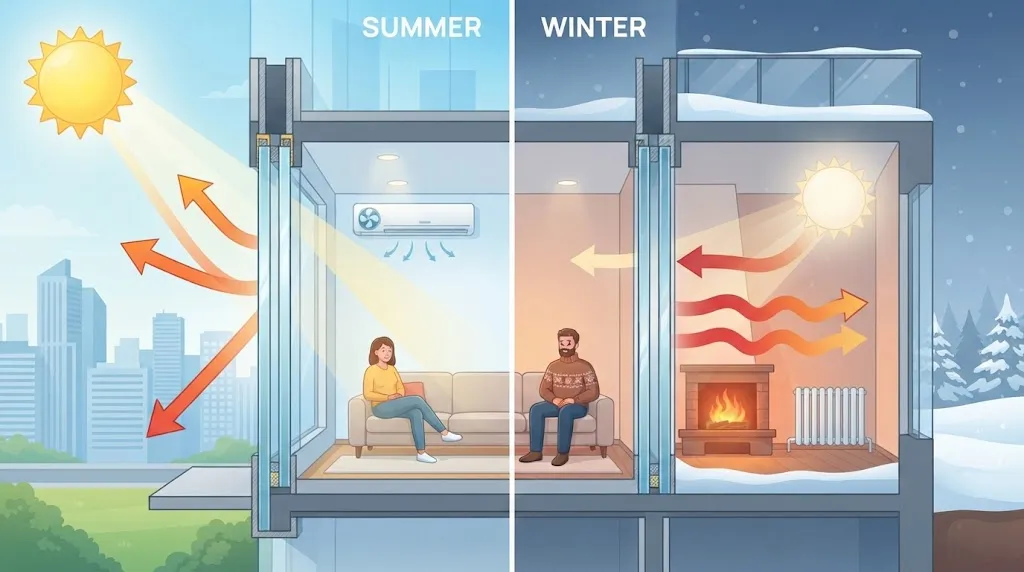
Energy efficiency has become a key consideration in modern building design. Windows and glass curtain walls provide natural daylight and attractive views, but they can also contribute to unwanted heat gain in summer and heat loss in winter. Low-E glass offers an effective way to improve thermal performance while maintaining a bright, modern appearance.
1. What Is Low-E Glass?
Low-E glass, short for low-emissivity glass, features a microscopically thin coating that controls the transfer of thermal radiation. The coating allows visible light to pass through while reflecting a significant portion of long-wave infrared radiation.
Depending on the coating design, Low-E glass can help retain indoor heat during cold weather or reduce unwanted solar heat gain in warmer climates.
Common applications include:
- Commercial buildings and office towers
- Glass curtain walls and building facades
- Residential windows and doors
- Hotels, schools, and public buildings
- Energy-efficient insulated glass units
2. Three Ways Low-E Glass Improves Energy Efficiency
Reduces Heat Transfer
Low-E coatings reduce radiant heat transfer through glazing. When combined with double or triple glazing, sealed cavities, and suitable gas fills, they can improve the overall thermal insulation of a window system.
This helps reduce heat loss in winter and supports more stable indoor temperatures throughout the year.
Controls Solar Heat Gain
In warm climates, excessive solar radiation can increase indoor temperatures and air-conditioning demand. Solar-control Low-E glass is designed to limit unwanted solar heat gain while maintaining useful daylight.
The appropriate coating depends on the building’s climate, orientation, shading design, and cooling requirements.
Maintains Natural Daylight
Energy efficiency does not have to mean sacrificing daylight. Modern Low-E coatings can be engineered to balance visible light transmission and solar heat control, helping architects create bright interiors without excessive solar heating.
The actual balance depends on the selected coating and complete glazing configuration.
3. Key Performance Indicators for Low-E Glass
When selecting Low-E glass for a building project, buyers and designers should evaluate the following parameters.
| Performance indicator | Why it matters |
|---|---|
| U-value | A lower value generally indicates less heat transfer through the glazing system. |
| Solar Heat Gain Coefficient (SHGC) | A lower value means less solar heat enters the building. |
| Visible Light Transmittance (VLT) | Indicates how much visible daylight passes through the glass. |
| Shading coefficient | Helps compare solar heat transmission against a specified reference glazing. |
These indicators should be evaluated together. A glass specification that performs well in a hot climate may not be the best choice for a heating-dominated climate.
It is also important to distinguish the performance of the glass itself from that of the complete window or curtain wall, which includes frames, spacers, seals, and installation details.
4. Tianhou Glass: Low-E Solutions for Architectural Projects
As an architectural and safety glass manufacturer based in Zhuhai, Guangdong, Tianhou Glass supplies processed glass solutions for commercial buildings and large-scale construction projects.
One example is the Fushan Smart Manufacturing Town project, which used double-silver Low-E insulating laminated glass in its curtain wall system, with an approximate project glass area of 103,657 square metres.
This project illustrates how advanced Low-E glazing can be incorporated into large commercial and industrial building envelopes. The combination of Low-E coatings, insulating glass construction, and laminated glass addresses different design requirements, including thermal performance, safety, and facade functionality.
Actual energy savings depend on the specified glass configuration, building design, local climate, HVAC systems, and installation quality. Project glass area alone should not be interpreted as a measured energy-saving result.
5. How to Choose the Right Low-E Glass
Before placing an order, project owners, architects, and contractors should consider:
- Climate: Determine whether reducing cooling demand or retaining indoor heat is the primary objective.
- Building orientation: Assess solar exposure on different facades.
- Glazing configuration: Compare double or triple glazing, cavity width, gas filling, and coating position.
- Safety requirements: Select tempered, laminated, or other suitable glass constructions according to applicable codes and project specifications.
- Performance targets: Confirm required U-value, SHGC, visible light transmission, and other relevant specifications.
Working with an experienced glass processor early in the design stage can help avoid mismatched specifications and improve coordination between glass manufacturing and facade installation.
Conclusion
Low-E glass improves building energy performance by controlling radiant heat transfer, managing solar heat gain, and supporting natural daylight. When properly specified as part of a complete glazing system, it can help reduce heating and cooling demand while improving indoor comfort.
For architects, contractors, and developers seeking architectural glass for commercial or residential projects, Tianhou Glass provides Low-E glass processing solutions tailored to project specifications.
Contact Tianhou Glass to discuss Low-E insulated glass, double-silver Low-E glass, and customized architectural glazing solutions for your next building project.