
News & Insights
Low-E Glass: A Complete Guide for Building Projects
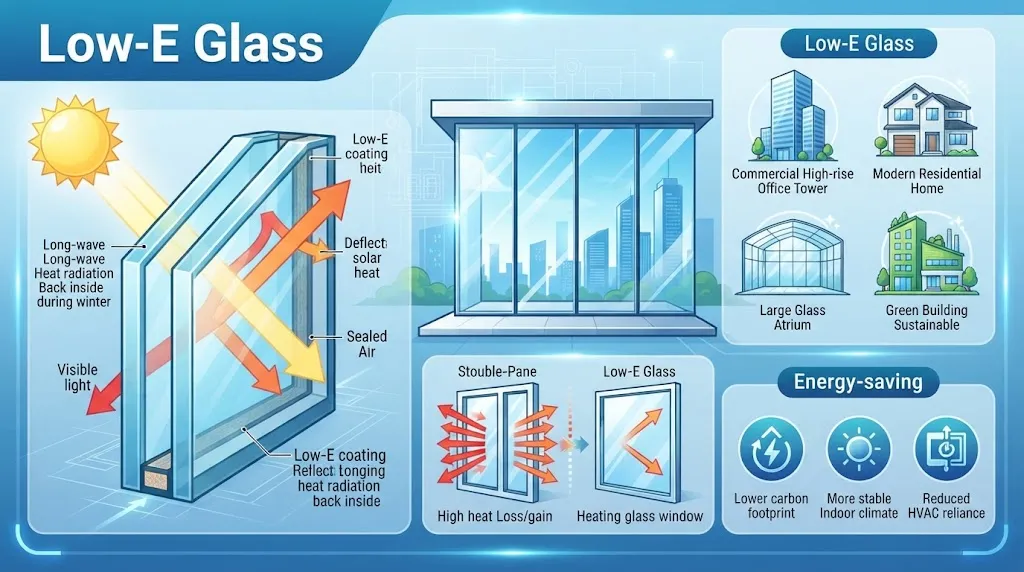
Low-E glass is widely used in modern architecture to improve energy efficiency, control solar heat gain, and maintain comfortable indoor environments. For commercial buildings, residential developments, and glass curtain wall projects, choosing the right Low-E glass can make a significant difference in overall building performance.
For developers, architects, and contractors, understanding Low-E glass types, performance indicators, and application requirements is essential to making informed purchasing decisions.
What Is Low-E Glass?
Low-E glass, short for low-emissivity glass, is glass with a microscopically thin coating designed to reduce heat transfer by thermal radiation. The coating can reflect long-wave infrared energy while allowing visible light to pass through, depending on its design.
Low-E glass is commonly used in insulating glass units (IGUs), which consist of two or more glass panes separated by a sealed cavity. The cavity may contain air or an insulating gas such as argon.
By combining Low-E coatings with insulated glazing, building projects can achieve improved thermal performance without relying entirely on dark or heavily tinted glass.
How Does Low-E Glass Work?
Low-E glass helps manage energy transfer through windows and building facades in two main ways:
- Reducing heat loss: In cooler conditions, an appropriate Low-E coating helps reflect indoor thermal radiation back toward the interior.
- Controlling solar heat gain: Solar-control Low-E coatings reduce the amount of unwanted solar energy entering a building while maintaining useful daylight.
The actual performance depends on the coating type, glass configuration, cavity design, and installation conditions.
Low-E glass does not automatically eliminate heat gain or heat loss. Instead, it helps balance thermal insulation, daylight, and solar control according to the building’s requirements.
Main Types of Low-E Glass
1. High-Solar-Gain Low-E Glass
This type is designed to reduce heat loss while allowing a relatively high proportion of solar energy to enter the building. It can be suitable for heating-dominated climates where passive solar heating is beneficial.
2. Solar-Control Low-E Glass
Solar-control Low-E glass is designed to limit unwanted solar heat gain while allowing natural light into the building. It is particularly useful for commercial buildings, glazed facades, and projects in hot or sunny climates.
3. Double and Triple Low-E Insulating Glass
Low-E coatings can be combined with double or triple glazing to improve insulation. Triple glazing adds another glass pane and cavity, although its additional cost, weight, and structural requirements must be considered.
The best configuration depends on the project’s energy targets, climate, facade orientation, and budget.
Key Performance Indicators for Low-E Glass
When specifying Low-E glass for a building project, buyers should evaluate the complete glazing system rather than relying on the Low-E label alone.
U-value: Measures the rate of heat transfer through the glazing system. A lower U-value generally indicates better thermal insulation.
Solar Heat Gain Coefficient (SHGC): Measures how much incident solar energy enters through the glazing, including energy absorbed and subsequently transferred indoors. A lower SHGC means less solar heat gain.
Visible Light Transmittance (VLT): Indicates how much visible daylight passes through the glass. A higher VLT generally means a brighter interior, although glare and facade design must also be considered.
Thermal and structural requirements: Glass thickness, wind-load resistance, safety requirements, edge sealing, and compatibility with the framing system must all be checked.
These indicators work together. For example, a product with a low SHGC may help reduce cooling demand, but the design team must also consider daylight requirements and the desired exterior appearance.
Where Is Low-E Glass Used?
Low-E glass is suitable for a wide range of architectural applications, including:
- Commercial office buildings and glass curtain walls
- Residential windows, doors, and balconies
- Hotels, shopping centers, and mixed-use developments
- Schools, hospitals, and public buildings
- Skylights and other glazed building elements, where the specified system is suitable
In hot climates, solar-control performance is often a priority. In colder climates, reducing heat loss may be more important. Buildings in mixed climates may require a balanced approach.
How to Choose Low-E Glass for Your Project
Before requesting a quotation, project buyers should clarify the following requirements:
- Project location and climate: Identify the main heating and cooling demands.
- Glass application: Specify whether the glass will be used for curtain walls, windows, doors, skylights, or another application.
- Required performance: Confirm the target U-value, SHGC, and VLT based on local building codes and project specifications.
- Glass configuration: Determine whether double or triple glazing is required, including glass thickness, cavity width, and gas filling where applicable.
- Safety and processing: Confirm whether tempered, laminated, heat-strengthened, or other processed glass is required.
- Installation and quality control: Check compatibility with the facade system, edge-seal requirements, and applicable testing standards.
For large projects, the design team should review technical data and, where necessary, evaluate the proposed glazing configuration before mass production.
Low-E Glass Solutions from Tianhou Glass
Guangdong Tianhou Glass Engineering Co., Ltd. is a glass deep-processing company based in Zhuhai, Guangdong, China. The company serves architectural and construction applications, including curtain wall glass, insulated glass, laminated glass, tempered glass, and customized glazing solutions.
For projects requiring Low-E insulating glass, Tianhou Glass can work with buyers and project teams to discuss glass configurations, processing requirements, and application-specific specifications.
For example, a commercial building in a warm, humid region may require solar-control Low-E insulating glass to balance daylight, solar heat gain, and indoor comfort. The appropriate coating, glass combination, and performance targets should be selected according to the actual facade design and project requirements.
Rather than choosing glass based on coating type alone, project teams should evaluate the complete glazing assembly and verify that the proposed specifications meet applicable standards.
Frequently Asked Questions About Low-E Glass
Does Low-E glass reduce energy consumption?
Low-E glass can reduce heat transfer through glazing and help lower heating or cooling demand. Actual energy savings depend on the glazing configuration, building design, climate, HVAC system, and installation quality.
Is Low-E glass suitable for hot climates?
Yes. Solar-control Low-E glass can help reduce unwanted solar heat gain while preserving useful daylight. The appropriate SHGC and VLT should be selected for the project’s climate and facade orientation.
Is Low-E glass always double glazed?
No. Low-E coatings can be used in different glazing configurations, but many high-performance architectural applications use Low-E glass in sealed insulating glass units. The suitable construction depends on the coating and project requirements.
Does Low-E glass look different from clear glass?
Low-E glass may have a subtle color or reflective appearance, depending on the coating and glass combination. Samples and technical data should be reviewed when visual consistency is important.
How can I request a Low-E glass quotation?
Prepare the project location, glass dimensions, thickness, coating requirements, glazing configuration, quantity, and applicable performance standards. Tianhou Glass can then assess the requirements and discuss a suitable glass processing solution.
Conclusion
Low-E glass is an important option for energy-efficient architectural glazing. By managing heat transfer and solar energy, it can help improve indoor comfort and support better building energy performance.
The right choice depends on more than the coating itself. U-value, SHGC, visible light transmittance, glass configuration, safety requirements, and local climate should all be considered together.
For architects, contractors, developers, and glass distributors sourcing architectural glass from China, Tianhou Glass offers project-oriented glass processing solutions and technical coordination for customized building applications.