
News & Insights
Energy-Efficient Facades: Where the Glass Industry Is Heading
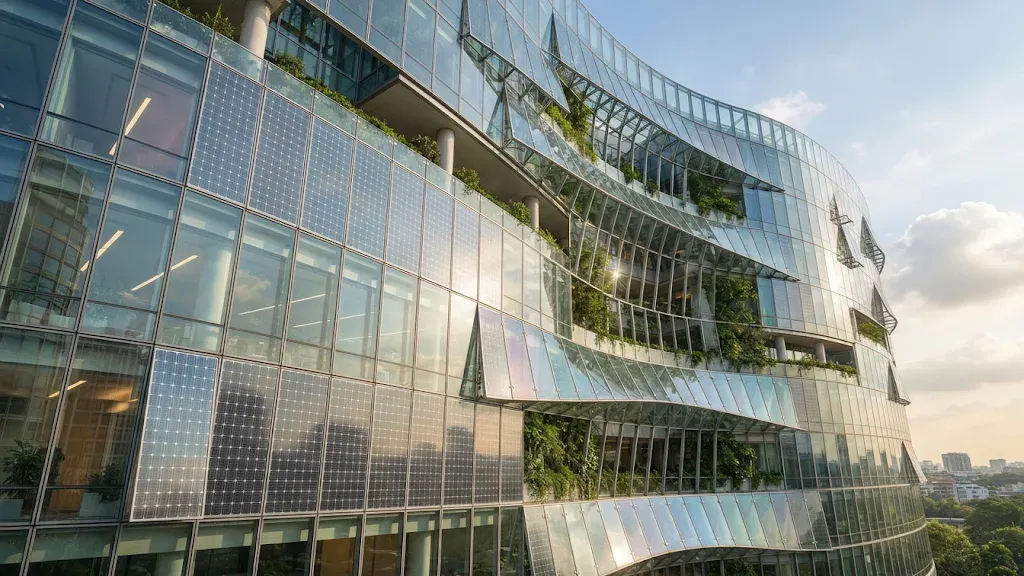
Energy efficiency is becoming one of the most important considerations in modern building design. As cities expand and demand for sustainable construction increases, building facades are evolving from simple exterior enclosures into essential components of energy management.
Glass plays a particularly important role in this transformation. Modern architectural glazing must balance natural daylight, thermal insulation, solar control, safety and aesthetic appeal.
According to the International Energy Agency (IEA), buildings account for approximately 30% of global energy demand. Improving building envelopes is therefore an important part of reducing energy consumption and operational emissions.
For the glass industry, this creates new opportunities for high-performance glazing technologies and more integrated facade solutions.
1. Low-E Glass Is Becoming a Standard Choice
Low-emissivity (Low-E) glass is one of the most important technologies in energy-efficient facade design.
Its microscopic coating helps control heat transfer while allowing natural daylight to enter the building. Depending on the coating configuration, Low-E glass can reduce unwanted solar heat gain in warmer climates or help retain indoor heat in colder environments.
For commercial buildings with large glass facades, these properties can help reduce the workload of heating, ventilation and air conditioning (HVAC) systems.
Low-E insulated glass units (IGUs) are particularly useful because they combine solar control with improved thermal insulation.
As energy performance requirements become more demanding, Low-E glazing is increasingly becoming a preferred solution for office buildings, hotels, shopping centers and other commercial developments.
2. Insulated Glass and Vacuum Glazing Are Driving Innovation
Another major development is the improvement of multi-layer glazing systems.
Traditional single glazing provides limited thermal insulation. Double and triple glazing improve performance by introducing sealed spaces between glass panes, often using air or inert gas fills.
Key advantages include:
- Reduced heat transfer through the building envelope.
- Improved indoor temperature stability.
- Better occupant comfort near windows.
- Potential reductions in heating and cooling energy consumption.
- Improved acoustic performance when properly designed.
Vacuum insulated glass is another promising technology. By creating a vacuum space between two glass panes, it significantly reduces heat transfer through gas conduction and convection.
Its relatively slim construction also makes it attractive for projects where high thermal performance is required without substantially increasing glazing thickness.
These technologies are expanding the possibilities for energy-efficient windows and curtain wall systems.
3. Smart Facades Will Combine Glass with Intelligent Control
The future of facade engineering will involve more than selecting the right glass specification.
Smart facade systems are increasingly integrating glazing with automated shading, sensors and building management systems.
Emerging technologies include:
- Electrochromic glass that adjusts its tint in response to electrical control.
- Automated external shading systems.
- Solar-responsive facade systems.
- Integrated photovoltaic glazing.
- Intelligent building management and environmental monitoring.
These technologies allow buildings to respond more effectively to changing sunlight, outdoor temperatures and occupancy conditions.
Although smart glazing is still developing in terms of cost and large-scale adoption, it represents an important direction for the architectural glass industry.
4. Sustainable Facades Require More Than Energy-Efficient Glass
A high-performance facade is a complete building system rather than an individual glass product.
Even advanced Low-E or insulated glass cannot achieve its full potential if the supporting frame, installation details and facade connections are poorly designed.
Project teams should consider several factors:
Thermal performance: Evaluate the U-factor and Solar Heat Gain Coefficient (SHGC) of the complete glazing system.
Daylight transmission: Balance solar control with sufficient natural light to reduce dependence on artificial lighting.
Structural safety: Select appropriate tempered or laminated glass configurations according to project requirements.
Installation quality: Ensure correct sealing, spacer selection and edge protection to maintain long-term performance.
Lifecycle considerations: Evaluate durability, maintenance requirements and long-term operational benefits rather than focusing only on initial material costs.
A successful energy-efficient facade requires coordination between architects, facade consultants, glass manufacturers and construction contractors.
5. Tianhou Glass: Supporting the Development of High-Performance Facades
Tianhou Glass is a Chinese architectural and safety glass manufacturer based in Zhuhai, Guangdong, in the Greater Bay Area.
Founded in 2011, the company operates a glass processing facility of approximately 20,000 square meters, providing glass solutions for commercial buildings, public facilities and architectural projects.
Its product capabilities include:
- Low-E insulated glass.
- Double and triple glazing.
- Tempered glass.
- Laminated safety glass.
- Vacuum insulated glass.
- Curtain wall glass.
- Custom architectural glass processing.
Tianhou Glass has participated in a range of architectural and public infrastructure projects, including Poly Lingxiu Mountain, Zhuhai No. 26 Primary School, Zhongshan North Railway Station and Zhuhai Station.
These projects reflect the diverse requirements of modern architectural glass applications, from residential and educational buildings to transportation infrastructure.
For projects requiring energy-efficient facades, Tianhou Glass focuses on matching glass configurations to specific building requirements, including solar control, thermal insulation, safety, transparency and structural considerations.
By combining glass processing capabilities with project-oriented product selection, the company supports architects, contractors, developers and international buyers seeking reliable architectural glass solutions.
6. What Comes Next for the Architectural Glass Industry?
Several trends are expected to shape the future of architectural glazing.
Higher-performance coatings: Advances in Low-E coating technology will continue improving the balance between visible light transmission and solar heat control.
Thinner, higher-performance glazing: Vacuum insulated glass and advanced multi-layer systems will create more options for projects with demanding thermal requirements.
Integrated facade technologies: Glass, shading, photovoltaic systems and intelligent controls will increasingly work together.
Sustainable material selection: Building owners will pay greater attention to product durability, manufacturing efficiency, recyclability and whole-life environmental impact.
Performance-based procurement: Developers and contractors will increasingly evaluate glass products based on measurable performance rather than appearance and price alone.
The direction is clear: architectural glass is becoming an increasingly important part of sustainable building design.
Conclusion
Energy-efficient facades represent a major opportunity for the global glass industry. Low-E coatings, insulated glass units, vacuum glazing and smart facade technologies are changing how architects and developers approach building envelopes.
However, achieving genuine energy efficiency requires more than choosing advanced glass. Climate conditions, building orientation, frame systems, installation quality and overall facade design must work together.
For architects, developers and construction companies, selecting an experienced architectural glass manufacturer is an important step toward achieving reliable facade performance.
Tianhou Glass continues to provide architectural and safety glass solutions for commercial buildings, public infrastructure and international construction projects, supporting the industry’s transition toward more energy-efficient and sustainable facades.