
News & Insights
Insulated Glass Units (IGU): How to Choose the Right Glass
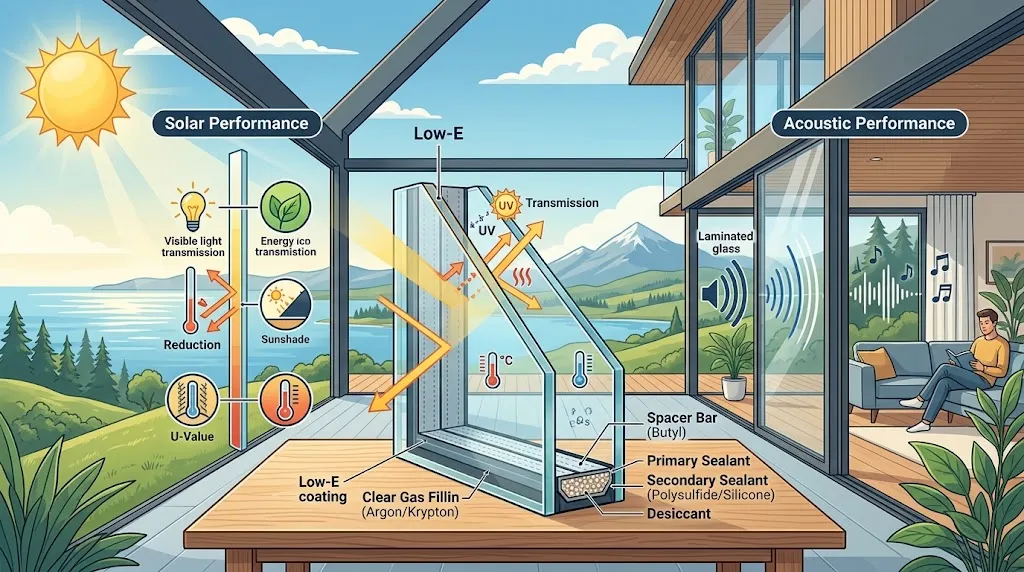
Insulated glass units (IGUs) are widely used in modern buildings to improve thermal performance, support energy efficiency, and create more comfortable indoor environments. From residential windows to commercial curtain walls, the right IGU configuration can help balance heat transfer, daylight, solar control, and acoustic comfort.
For architects, developers, contractors, and window manufacturers, selecting an IGU involves more than choosing double or triple glazing. Glass type, cavity design, coatings, sealing quality, and installation conditions all matter.
1. What Is an Insulated Glass Unit (IGU)?
An insulated glass unit consists of two or more panes of glass separated by a sealed cavity. The cavity typically contains dry air or an insulating gas, such as argon. Spacers and edge seals help maintain the cavity and limit moisture entry and gas loss.
Common configurations include:
- Double glazing: Two glass panes separated by one cavity. A practical choice for many residential and commercial applications.
- Triple glazing: Three glass panes with two cavities. It can provide improved thermal insulation, depending on the complete unit design.
- Low-E insulated glass: Uses a low-emissivity coating to reduce radiative heat transfer while maintaining a suitable level of visible light transmission.
- Laminated insulated glass: Combines an insulated cavity with laminated glass for applications requiring additional safety, security, or acoustic considerations.
The best option depends on the building’s climate, facade design, energy targets, and applicable safety requirements.
2. Evaluate Thermal Performance
Thermal performance should be one of the first considerations when choosing an IGU.
U-factor measures heat transfer through a glazing product. A lower U-factor generally indicates better insulation.
Solar Heat Gain Coefficient (SHGC) measures the fraction of incident solar energy that enters through the product. A lower SHGC means less solar heat gain.
Visible Transmittance (VT) indicates how much visible light passes through the glazing. A higher VT generally means more daylight enters the building.
These factors should be evaluated together. For example, buildings in hot, sunny climates may benefit from Low-E glass with appropriate solar control, while buildings in cold climates may prioritize low heat transfer without unnecessarily sacrificing useful solar gain.
For reliable comparisons, check certified performance data for the complete window or facade system rather than relying on glass thickness alone.
3. Choose the Right Glass and Cavity Configuration
The glass panes and the space between them work together to determine the IGU’s performance.
Consider these factors:
- Glass thickness: Select according to panel dimensions, wind loads, structural requirements, and applicable building codes.
- Cavity width: The optimal gap depends on the gas fill, glazing configuration, and thermal design. A wider cavity does not automatically deliver better insulation.
- Low-E coating: Choose the coating type and position based on thermal insulation, solar control, daylight, and the manufacturer’s specifications.
- Gas fill: Argon can improve thermal performance compared with ordinary air in suitable IGU designs, provided the unit is properly sealed.
- Spacer and edge seal: A well-designed edge system helps limit moisture penetration, preserve gas retention, and reduce heat transfer around the glass perimeter.
For triple glazing, laminated glazing, or large curtain-wall panels, the complete assembly should be assessed to ensure that the proposed configuration meets the project’s technical requirements.
4. Consider Sound Insulation, Safety, and Condensation
Thermal efficiency is only one part of IGU selection.
Sound insulation: Glass thickness, differences between pane thicknesses, laminated interlayers, cavity design, and the airtightness of the complete window system can all affect acoustic performance. For projects near roads, railways, or airports, request tested acoustic data for the proposed assembly.
Safety and security: Tempered or laminated glass may be required depending on the installation location, impact risk, and security objectives. Laminated glass can help retain fragments after breakage, while tempered glass is designed to break into smaller fragments. Neither should be selected without considering the applicable safety requirements.
Condensation resistance: Indoor humidity, outdoor temperature, frame design, thermal bridging, and edge-spacer performance all influence condensation risk. A suitable IGU can reduce condensation under appropriate conditions, but it cannot eliminate every cause of moisture buildup.
5. Match the IGU to the Building Application
Different building types require different glazing priorities.
| Application | Key selection priorities |
|---|---|
| Residential windows | Thermal insulation, daylight, comfort, and condensation control |
| Commercial curtain walls | Solar control, structural performance, facade appearance, and energy efficiency |
| Hotels and apartments | Thermal comfort, acoustic performance, and appearance |
| Offices | Daylight, glare control, solar heat gain, and energy performance |
| Security-sensitive buildings | Appropriate laminated or specialized glass, alongside thermal requirements |
Always verify the complete system’s structural, thermal, acoustic, and safety performance against the project’s specifications and local regulations.
6. Tianhou Glass: Custom IGU Solutions for Architectural Projects
Tianhou Glass provides glass processing and customized glazing solutions for architectural and engineering applications. Its approach focuses on matching glass configurations to project requirements rather than applying a single specification to every building.
One example is the Fushan Industrial Park Smart Manufacturing Town project, which features a curtain-wall system using double-silver Low-E insulating laminated glass. The project covers approximately 103,657 m², demonstrating the scale of glazing coordination involved in a major industrial development.
For projects of this type, selecting the right IGU requires consideration of solar control, thermal performance, safety, facade design, and installation requirements. The final specification must be determined according to the project’s design and verified technical data.
By combining glass selection with customized processing, Tianhou Glass supports architects, facade contractors, developers, and other engineering clients in finding suitable glazing solutions for their projects.
7. A Practical Checklist Before Ordering IGUs
Before requesting a quotation from an insulated glass manufacturer, prepare the following information:
- Application: Windows, curtain walls, doors, skylights, or another building component.
- Glass configuration: Double or triple glazing, glass thicknesses, and any laminated or tempered requirements.
- Performance targets: Required U-factor, SHGC, visible transmittance, and acoustic performance where applicable.
- Coating requirements: Low-E type, solar-control properties, and preferred visual appearance.
- Dimensions and processing: Panel sizes, edgework, holes, notches, and other fabrication requirements.
- Standards and documentation: Applicable safety standards, test reports, quality requirements, and project-specific specifications.
Providing these details early helps manufacturers assess feasibility, recommend suitable configurations, and reduce the risk of costly changes during production.
Conclusion
Choosing the right insulated glass unit means balancing thermal insulation, solar control, daylight, sound insulation, safety, and long-term durability. Double glazing is suitable for many applications, while triple glazing or specialized Low-E and laminated configurations may be appropriate for more demanding projects.
The most effective choice is the one that meets the building’s actual performance requirements and works reliably within the complete facade or window system.
Looking for a customized insulated glass solution? Contact Tianhou Glass to discuss your project requirements, glass configurations, and architectural glazing needs.